Why Smaller AI Models Are the Smarter Choice: Lessons from NVIDIA Research


The AI industry has spent years chasing bigger models. More parameters. More compute. More cost. But what if the future of practical AI isn't about going bigger but it's about going smarter?
NVIDIA recently published a position paper that challenges the status quo: "Small Language Models are the Future of Agentic AI." Their argument is compelling, and it aligns with what many of us building production systems have experienced firsthand.
The Economics Don't Lie
Here's a sobering reality check: in 2024, the industry invested $57 billion in large language model infrastructure to support a market worth just $5.6 billion. That's a 10:1 ratio of investment to return.
Meanwhile, smaller models typically under 10 billion parameters can be 10 to 30 times cheaper to serve. They require fewer GPUs, can be fine-tuned in hours rather than weeks, and often run on modest hardware, even on-premises.
For enterprises focused on margins rather than hype, this math matters.
The Hallucination Problem Gets Smaller Too
One of the most persistent challenges in deploying AI is hallucination, when models generate confident-sounding nonsense. And here's what the research shows: smaller, specialized models often hallucinate less than their larger counterparts.
Why? Three reasons:
1. Focused Training DataWhen you fine-tune a model on curated, domain-specific data, you're teaching it exactly what it needs to know and nothing more. There's less noise, fewer conflicting patterns, and a clearer signal. Task-specific models trained on high-quality data show up to 40% fewer hallucinations compared to models trained on raw internet data.
2. Bounded ScopeAs OpenAI's own research notes, it can actually be easier for a small model to recognize its limitations. A model that knows it doesn't understand Māori can simply say "I don't know." A larger model with partial knowledge might guess and get it wrong with full confidence.
3. Specialized ValidationSmaller models deployed for narrow tasks are easier to test, validate, and monitor. You can build targeted evaluation pipelines, catch errors faster, and implement domain-specific guardrails that would be impractical for general-purpose behemoths.
Recent benchmarks confirm this: specialized models like Zhipu AI's GLM-4-9B-Chat achieve hallucination rates comparable to or better than models many times their size.
The Right Tool for the Right Job
NVIDIA's core insight is this: most agentic AI tasks are repetitive and narrow. An AI agent parsing JSON tool calls doesn't need the full breadth of GPT-4. It needs to do one thing reliably, quickly, and cheaply.
The proposal isn't to abandon large models entirely. It's to build heterogeneous systems:
- Small models handle the bulk of operational subtasks: parsing commands, generating structured outputs, answering contextualized questions
- Large models get called selectively for complex reasoning, cross-domain abstraction, or open-ended dialogue
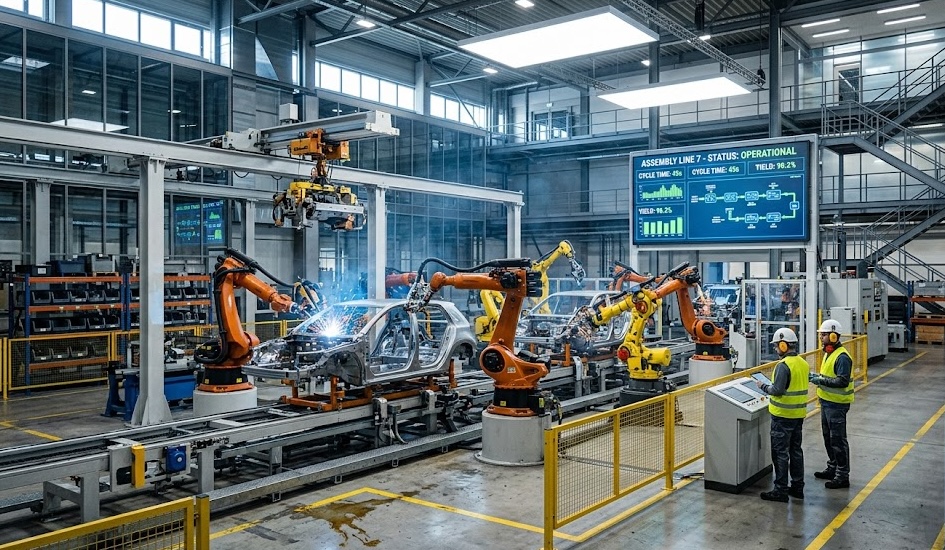
Think of small models as the workers in a digital factory efficient, specialized, reliable. Large models are the consultants called in when broad expertise is needed.
A Practical Path Forward
NVIDIA outlines a straightforward approach for organizations ready to make this shift:
- Analyze usage patterns from your existing LLM deployments
- Cluster workloads by tool requirements and task type
- Deploy task-specific SLMs optimized for your actual needs
- Reserve LLM calls for genuinely complex scenarios
- Implement continuous improvement using real usage data
The fine-tuning economics make this viable. Parameter-efficient techniques like LoRA let you adapt models in GPU-hours, not GPU-weeks. Behaviors can be added, fixed, or specialized overnight.
The Democratization Effect
Perhaps the most exciting implication: capabilities that previously required massive GPU clusters become accessible to smaller organizations. You can run sophisticated AI on a workstation. On edge devices. On-premises with full data control.
This isn't just about cost savings. It's about who gets to build with AI.
The Bottom Line
The AI industry is maturing. The era of "bigger is always better" is giving way to something more nuanced: the right model for the right task.
If you're building AI systems today, consider this:
- What tasks are you actually performing?
- How many of them truly need a 175-billion-parameter model?
- What would your infrastructure costs look like with specialized alternatives?
- How would focused fine-tuning affect your accuracy and hallucination rates?
- Do you need a fine-tuned model or can you use a smaller training data set to begin with?
The organizations that answer these questions honestly will build AI that's not just impressive but sustainable, reliable, and economically viable.
The future of AI isn't necessarily bigger. It might just be smarter.
.jpg)