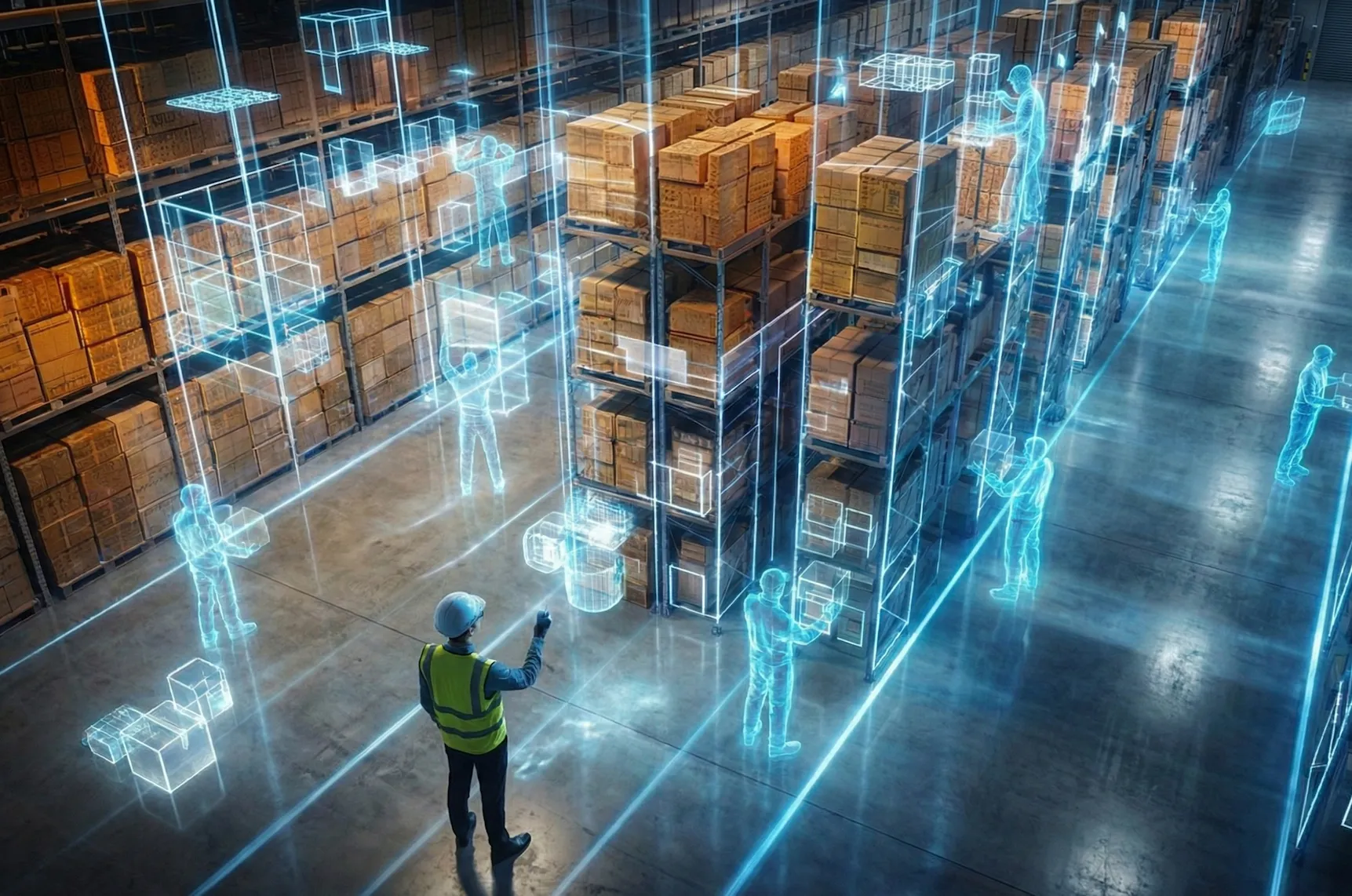
Why we are building a foundation model specifically for industrial operations

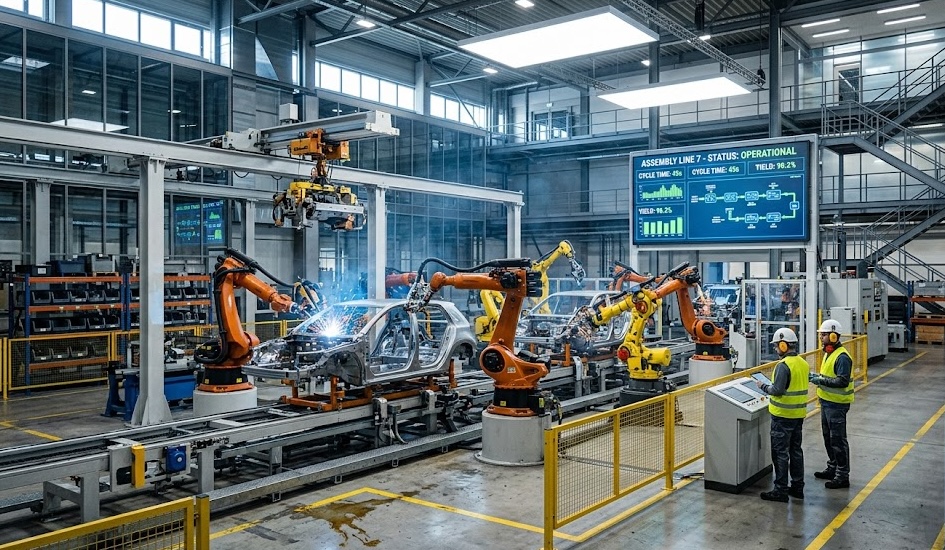
The rationale
We've spent the last couple of years putting autonomous agents to work inside real industrial operations: supplier onboarding, procurement, and the supply chain and back-office processes that keep manufacturers and their networks running. These agents don't behave like another feature inside a piece of software. They act the way a BPO or a consulting firm would, taking on entire processes and executing them on the enterprise's behalf. A digital workforce, not a tool.
That is what raises the bar. The clearest lesson from this work is about trust.
“When you outsource a process to a BPO or hand it to a consultant, you are trusting a provider to run it correctly on your behalf, and the same holds, only more so, when that provider is AI. “
For it to run an operation on its own, rather than assist a person doing it, an enterprise has to be able to trust it to be right, not most of the time, but every time it matters. Everything else is secondary to that.
No general-purpose model clears that bar for operations, however large it gets, and a model on its own would not clear it either, even one built specifically for operations. The model is one piece of a much larger system, and it is the system, not the model alone, that has to earn the trust. Two things have to come together. Every individual decision has to be right, which takes the model reasoning in harmony with the full context the decision draws on, the operational knowledge that defines what correct even means, and the tools the work is carried out through, with a neuro-symbolic architecture making each result provable rather than merely probable. And the system has to run entire processes on its own, over the horizons real operations live on. A supplier onboarding or a procurement cycle unfolds over days, weeks, sometimes months, far beyond what any model's context window or any single agent conversation can hold. So the memory, the state, and the execution have to live above the model, persistent at the platform level and decoupled from any one conversation, so the work carries on no matter how many conversations begin and end along the way.
“The Model, the context and knowledge layer have to work in harmony governed by a neuro-symbolic architecture to achieve end-to-end trust day in day out”
This is the real shift we're after: not a smarter assistant inside a chat window, but a system that can take an operation and run it, end to end, the way a team that never logs off would. Every layer working as one, the context, the operational knowledge, the tools, the model, and the long-horizon orchestration that binds them, built and owned together.
So that is what we're building: a vertically integrated, full-stack neuro-symbolic AI platform for operations. At its core is a foundation model, built for a single domain unlike OpenAI or Anthropic who build theirs for everything. Around it sits the rest of what trust requires: the context, the operational knowledge, the tools the work runs through, and the neuro-symbolic reasoning, orchestrated in harmony and over the long horizons operations take, all connected through an architecture we own end to end. The first version will be available in September 2026, and we want to show how all those pieces fit together in the service of an AI an enterprise can trust with their operations.
What it takes to earn that trust
Trust is hard to earn in operations because two things have to be true at once, and most AI manages only one.
The first is context. An operational decision, approving a supplier, validating a shipment, reconciling an invoice against what was ordered and what arrived, depends on information that is detailed, specialized, and largely unstructured. It rarely sits in one place. It is spread across ERP records, supplier portals, email threads, scanned purchase orders, certificates of conformity, technical specifications, packing lists, and photographs of the goods themselves, in a dozen different formats. To get the decision right, a model has to pull all of that together and interpret it the way an experienced operations specialist would: reading the supplier document, checking the certificate against the specification, noticing the line item that doesn't reconcile or the photo that doesn't match the delivery note.
Now there are two challenges with that. First, General-purpose models can't take in that breadth natively, which is why most attempts end up as brittle pipelines of OCR engines, parsers, and integrations assembled in front of a text model, and why they break the moment reality varies from the expected case. Second, the cost of processing all that context for every operational transactions - POs, invoices, suppliers etc for hundreds or thousand of cases every day will burn through months worth of tokens in a matter of weeks.
The second thing needed to earn the trust is conformance. Operations run on hard rules: contracts, specifications, compliance requirements, and business logic that has to hold every single time. The cost of being wrong is not a clumsy sentence; it is a wrong order, a broken commitment, a compliance breach. This is where general-purpose models fall short. They are probabilistic by design, returning the most likely answer and, on occasion, a confident wrong one. That is the right instinct for understanding language and the wrong one for guaranteeing that a result obeys the rules an operation runs on. Understanding the context but getting the rule wrong is not something you can trust. Neither is following the rule without truly understanding the context.
A model an enterprise can trust has to do both at once, and that is why the model we're building is neuro-symbolic. The neural side understands the complex, unstructured reality of operational data, the documents, tables, images, and records a decision draws on. The symbolic side encodes the deterministic logic, constraints, and validation the work demands and enforces them, so the model's output is checked against the rules and guaranteed to satisfy them rather than merely approximating them. The neural part understands; the symbolic part proves. Together they make a result that is both context-aware and correct by construction.
Concretely, that architecture gives us properties a general-purpose model cannot:
- Verifiable correctness. Every result is checked against the operation's rules and constraints and has to satisfy them, rather than being accepted as the statistically likely answer.
- Auditability. Each decision carries the reasoning behind it and the rules it met, which is exactly what compliance and accountability in operations demand.
- Knowledge you can manage without retraining. The rules, constraints, and operational knowledge live in the symbolic layer, so they can be updated and corrected directly as the business changes, instead of being relearned from scratch.
- An optimised, more efficient model. Because the symbolic layer governs the model and adds to the logic, the model would otherwise have to brute-force with scale, the neural model stays smaller and cheaper to run.
Understanding the context and conforming to the rules are the two halves of trust, and neuro-symbolic architecture is what holds them together. For us it isn't a feature of the model. It is the reason the model can be trusted at all.
A vertically integrated, neuro-symbolic AI platform
Earning that trust end to end is also why we're building the platform ourselves rather than fine-tuning someone else's model. We own the full stack: the architecture, the foundation model, the training and fine-tuning, the context, knowledge, and tool layers, and the in-tenant deployment our customers already rely on, along with all of the IP, grounded in our own operations know-how and data. That vertical integration is what lets us stand behind how the platform behaves, and keep improving it for the work it actually has to do.
It also lets the pieces work as one. The platform orchestrates the model, the context, the operational knowledge, and the tools in harmony, and it runs processes over the long horizons real operations take, holding the state of a supplier onboarding or a procurement cycle outside the model and outside any single agent conversation. A conversation can end; the work does not. That separation is what lets an agent pick a process up, carry it for as long as it takes, and finish it correctly.
For specific parts of the stack where we believe a specialist is best suited to support us, Kovant partners with Inceptron, a Swedish AI infrastructure company.
Inceptron’s compiler and serving stack help Kovant optimize the model for the hardware it actually runs on. The goal is to ensure a purpose-built architecture that executes efficiently and correctly in production. For sovereign deployments where operational data cannot leave the customer’s region or environment, there is an option to run inference on Inceptron’s optimized infrastructure and deployment layer. That makes trust practical at the scale of a real operation. A production system may make tens of thousands of decisions per day, so the economics need to work at that volume.
That combination is what makes trust practical at the scale of a real operation. An operation makes tens of thousands of decisions a day, so the economics have to work at that volume. A domain-specific model is far more efficient than a general-purpose giant forced into the same task, and with Inceptron's compiler and inference layer optimisation enabling Kovant, we are targeting up to a 20x reduction in token cost at comparable performance.
The result is a fully European, sovereign-by-design stack: our model running on Inceptron's optimised inference and rebuilt using their compiler, with each customer's data staying inside their own environment. Our two teams are working hand in hand through the September release.
The world we're building toward
We're building toward a world where the operational backbone of an enterprise runs on AI it can fully trust. Not trust won once in a demo, but trust earned day in and day out, every day of the year, the way a BPO that runs your operations has to. A vertically integrated, neuro-symbolic AI platform made for operations, a foundation model at its core, with context, knowledge, and tools working in harmony over long horizons, run on infrastructure we control end to end, is how we get there.
If you run industrial operations and want to be among the first to put it to work, I'd like to hear from you.
.jpg)